How Deep Should a Pole Base Be? 4 Factors You’ll Need to Consider.
The Pole-Basics
Short on time? Here are this article’s key takeaways…
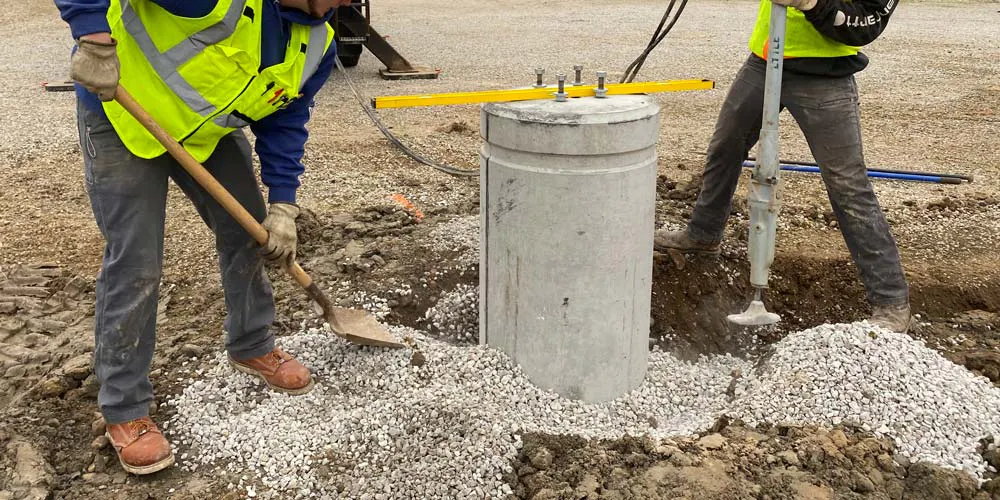
Embedment depth is primarily determined by soil conditions, along with pole height, fixture size, and site wind loading.
Taller poles and complex fixtures typically require deeper bases to maintain stability.
Wind speed assumptions vary by location, so regional loading conditions must be considered during design.
Pole Base design guides, charts, and example calculations can help engineers determine minimum embedment and create accurate project details.
Every light pole base detail is shaped by what’s happening both above and below ground. Soil conditions, pole height, fixture size, and regional wind loads all play a role in determining the right depth and dimensions. Understanding these factors—and using the right design resources—helps ensure your detail performs as intended.
What is Pole Base Embedment Depth Based On?
There are four main factors that determine how deep a Pole Base should be buried:
- Soil Conditions
- Pole Dimensions
- Fixture Specifications
- Wind Speed
To better understand these factors, we’ve brought in Pole Base engineer and Aster Brands Design Resources Manager, Laura Rechtin, PE, to this conversation. Laura specializes in managing and creating design resources for engineers, including construction details, specifications, and guides.
“The number one, most critical thing when determining Pole Base depth, is the soil type. That is going to be your biggest factor.” -Laura Rechtin, PE
Beyond geotechnical conditions, pole dimensions will influence the overall depth of a base–the taller the pole, the deeper (and typically larger, too) the base will need to be. Fixture size also plays a part. A larger light fixture or sign mounted on a light pole will also indicate the need for a larger, deeper base.
Wind speed needs to be considered. A Pole Base being designed for a coastal project is going to have different loading conditions compared to a base being installed inland, so it’s important to understand basic wind speed assumptions for your project’s location.
“When designing Pole Base for your project, basic wind speed needs to be considered in addition to geotechnical elements and light fixture specifications.” -Laura Rechtin, PE
Are There Design Guidelines for Embedment Depth? What Other Design Resources Are Available?
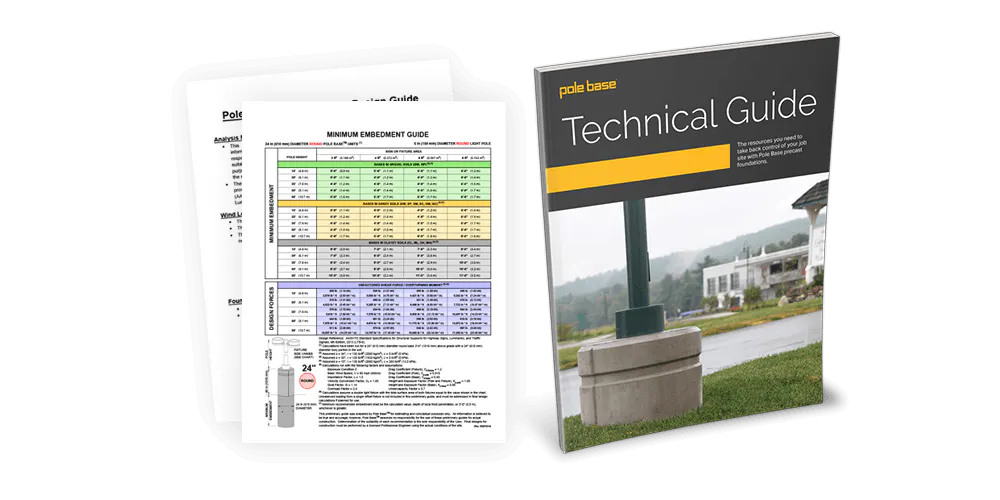
Minimum Embedment Guides are available for 18, 24, 30, and 36-in round light pole bases in the Pole Base Technical Guide, which is free to download. Also available on the Technical Resources page, you’ll find:
- Light pole base details
- Bollard details
- Taxiway light base details
- Specifications & design charts
- Pole Base Installation Manual
Bonus: In the Pole Base Design Charts, we’ve provided example calculations for determining the minimum required embedment for Pole Base units so you can make short work of your Pole Base design process.
Additional Pole Base Design Resources
AASHTO design guidance should be followed to determine interior component specifications for reinforcing bars. Conduit is typically determined by the site’s electrical plans, so you’ll also need to have a firm understanding of those before getting started.
Designing a light pole base detail comes down to understanding soil conditions, pole dimensions, fixture size, and wind loading. With Pole Base design guides, example calculations, and construction details available, you’ll have the resources you need to specify foundations confidently—helping projects move smoothly from design to installation. And, of course, if you encounter design questions along the way, you can talk to Laura or a member of her team and get the answers you need.
“Once you have a Pole Base design completed, that’s when you–or your client–will go to a Pole Base manufacturer. They’ll precast the bases in their controlled facilities and handle the logistics of jobsite delivery. Once your bases make it to the jobsite, the contractor will take it from there.” -Laura Rechtin, PE

Contributing Expert
Laura Rechtin, PE
Laura is the Design Resources Manager at Aster Brands, where she combines her expertise in geotechnical and civil engineering to deliver smart, efficient solutions for complex projects. Since joining the company as a Civil Engineering Consultant, she has become a trusted resource for navigating Aster Brands’ precast solutions. She holds a Master’s degree in Civil Engineering with a Geotechnical focus from Kansas State University and a Bachelor’s degree in Civil and Environmental Engineering from the University of Dayton. Outside of work, Laura enjoys spending time with her husband, daughter, and dogs. When she has some free time, she’s usually reading, hiking, or traveling to new places around the world.